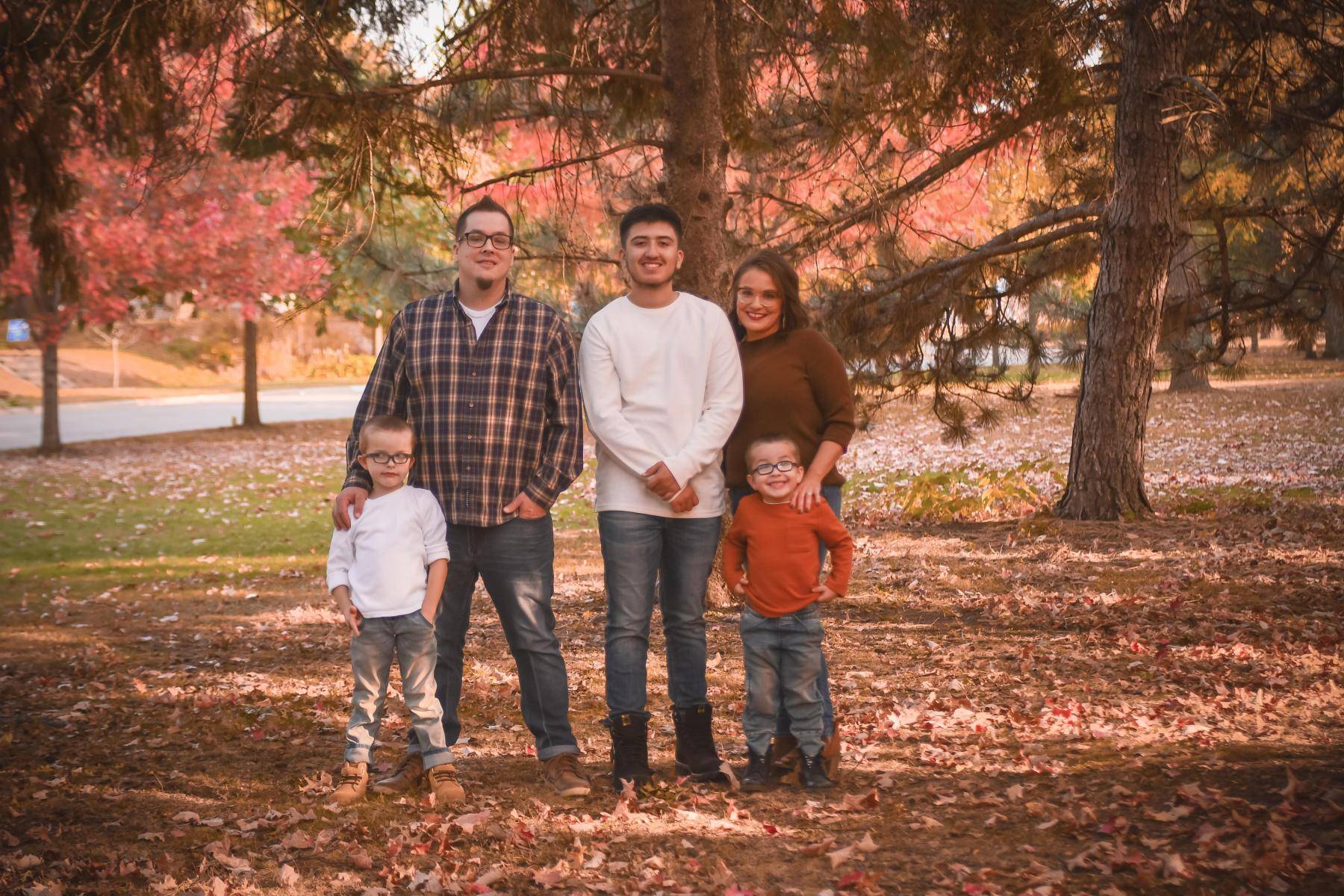
Let me tell you about the most common thing parents apologize for before a family session.
It’s not the outfits. It’s not being late. It’s not the baby who cries or the toddler who took a bad nap.
It’s the kids.
“I’m so sorry — she’s in a phase right now.” “He won’t look at the camera, I’m warning you.” “They were perfect at home and then we got here and I don’t know what happened.”
I hear some version of this in almost every family session with young children. And my response is always the same.
This is normal. This is the session. This is exactly what I work with.
After 25 years of photographing families in Saint Paul, I’ve developed a very specific set of thoughts on children who won’t cooperate in sessions — what it actually means, what doesn’t work, and what genuinely does. This post is the honest version of all of that.
Summary: If kids refuse to cooperate during a photo session, the best approach is to shift from posed prompts to active games, allow short breaks, and let the photographer lead. Staying calm as parents prevents kids from feeling pressured, resulting in natural, candid smiles.
First: What “Won’t Cooperate” Usually Means
When parents say their kids won’t cooperate, they usually mean one of a few things.
The child won’t look at the camera. They won’t stand still. They’re crying, or on the verge of it. They’re refusing to participate in any pose or direction. They’re doing something completely chaotic while their parents try to maintain some semblance of control.
Here’s my reframe for all of these: children at a family session are doing exactly what children do when they’re placed in an unfamiliar environment with a stranger pointing equipment at them. The “uncooperative” behavior is entirely logical.
The child who won’t look at the camera is curious about their surroundings. The child who won’t stand still has energy and nowhere specific to put it. The crying toddler is overwhelmed and communicating that clearly. The one doing something chaotic is a child being a child.
None of this is a problem to solve. It’s a context to work within. And an experienced family photographer has spent years learning how to work within it.
What Doesn’t Work
Bribing With Treats Right Before the Session
I know this feels like a solution. It isn’t, or at least not in the way parents hope.
Sugar right before a session produces a brief window of enthusiasm followed by a crash that lands right in the middle of the shoot. Save the treat for after — it’s a much more effective reward and it gives children something to look forward to rather than something to come down from.
Threatening Consequences
“If you don’t smile, we’re going home.” “Santa is watching.” “You need to cooperate or no screen time tonight.”
Threats produce one of two things: compliance that looks forced and tense, or escalation. Neither produces the natural, genuine expressions that make family photos worth having.
Children who are being threatened are managing fear and anxiety rather than being present. That shows up in the images in ways that can’t be edited out.
Trying to Make Young Children Hold Still
Toddlers and preschoolers are not designed to hold still. Their neurological development actively works against it. Trying to impose stillness on a two or three-year-old produces frustration for everyone and images that look exactly like what they are: a child being forced to do something against their nature.
The best images of young children almost never come from stillness. They come from movement caught at the right moment.
What Actually Works
Give Them Time to Warm Up
The single most effective thing that happens in family sessions with reluctant children is time.
Children who arrive anxious or uncooperative almost always shift within 15 to 20 minutes — if the pressure is off and they’re given space to observe and settle. I build this into sessions intentionally. I’m not in a rush to start directing the moment a family arrives. I let children lead the pace of settling in.
Parents who are anxious about their children’s behavior often inadvertently communicate that anxiety to their kids. When I slow things down and model calm, both parents and children tend to follow.
Ignore the Camera
The most reliable way to get genuine expressions from children is to give them something to do that has nothing to do with the camera.
I use games, prompts, movement, conversation — anything that gives children a genuine thing to engage with rather than asking them to perform for a lens they’re suspicious of. When a child is genuinely laughing at something or genuinely absorbed in something, the expression is real. And real is always better than posed.
Children who forget the camera is there — because they’re busy being chased, or whispering something to a sibling, or looking at something interesting on the ground — give me the images that parents cry over years later.
Follow the Child
The most productive thing I can do with a truly uncooperative child is follow what they’re actually interested in rather than redirecting them toward what I need.
A toddler who is fascinated by a stick on the ground is giving me something to work with. A five-year-old who wants to run is giving me something to work with. Even a child who is crying — truly crying, not performing — is giving me something genuine that I can photograph in a way that is true and sometimes extraordinarily beautiful.
I’ve made images during what parents described as “disaster” sessions that are among their most treasured. Because the camera caught something real — the particular way a mother holds a child who is upset, the expression on a father’s face when his kid is melting down and he’s trying not to laugh.
Cooperation is overrated. Truth is what I’m actually after.
Adjust Your Expectations — And Then Let Go
This is the advice I give every parent who is anxious about their children’s behavior before a session.
You are not going to get the session you’ve seen on Pinterest. You are going to get the session your actual family produces — with your actual children, on this actual day, with all of their energy and stubbornness and unpredictability.
And that session, photographed by someone who knows how to work with children, is going to produce images you love.
Not because everything went perfectly. Because something true happened, and I caught it.
If you’re planning a family session and you’re already anxious about how the kids will do, I put together a planning guide that walks through everything — including how to prep kids in a way that actually makes a difference. Grab it below and walk into your session feeling like you have a plan.
What I’ve Learned From 25 Years of “Difficult” Sessions
I want to end with something I genuinely believe after a quarter century of photographing families.
The sessions parents describe as difficult are often the ones that produce the most meaningful images.
Not in spite of the chaos — sometimes because of it. The realness of a hard session, when photographed by someone who knows how to see it, produces images that are more true and more lasting than the ones where everything went smoothly and everyone performed beautifully for the camera.
Your kids don’t need to cooperate for your session to matter.
They just need to be there. The rest is my job.