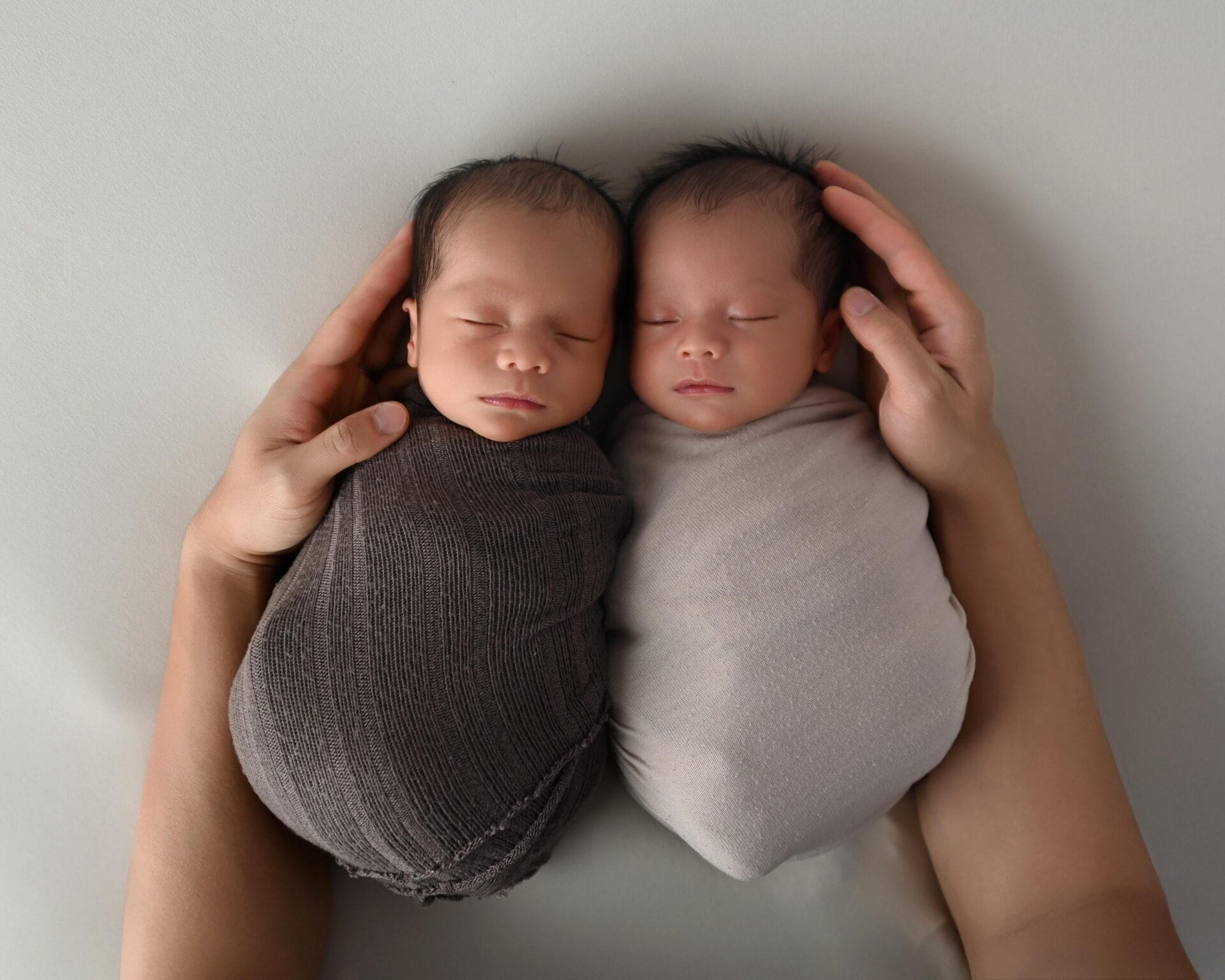
When parents book a newborn session, they usually think about the images.
Will the baby sleep?
Will we get a smiling sibling photo?
Will my hair look okay?
Will the poses turn out right?
Those questions feel urgent before the session.
But years later, when families look back, something interesting happens.
They rarely talk about the poses.
They rarely mention the props.
They don’t remember how long it took to settle the baby.
They remember how it felt.
And that is what shapes the memory of the day.
The Fear Beforehand
Before a newborn session, many parents feel nervous.
They are:
-
Sleep deprived.
-
Adjusting to a new routine.
-
Learning their baby’s cues.
-
Unsure how they will feel in front of the camera.
Some worry their baby will cry.
Some worry siblings won’t cooperate.
Some worry they themselves will feel overwhelmed.
The anticipation carries tension.
And that tension is understandable.
What Parents Don’t Remember
Years later, when I reconnect with families, I sometimes ask them what they remember most about their newborn session.
They don’t say:
“I remember when the baby startled during that pose.”
They don’t say:
“I remember how long it took to adjust the wrap.”
They don’t say:
“I remember that one frame that didn’t work.”
The small logistical moments disappear.
Because they were never the heart of the experience.
What They Do Remember
They remember:
-
The warmth of the room.
-
The quiet.
-
The slowness.
-
The way someone handled their baby gently.
-
The permission to sit down and breathe.
They remember feeling supported.
They remember that no one rushed them.
They remember that their baby was treated carefully.
The emotional tone becomes the anchor.
Experience Attaches to Images
There is something powerful about how the brain encodes memory.
When an experience feels calm and safe, the images associated with it carry that softness.
When an experience feels rushed or stressful, that tension lingers in recollection.
Newborn photography is not just about producing beautiful images.
It’s about creating an environment where parents feel regulated.
Because regulated parents create regulated babies.
And regulated sessions create meaningful images.
Parents Remember Being Seen
Many parents walk into a newborn session feeling invisible.
Everyone is focused on the baby.
They are tired.
Their bodies are healing.
Their identities are shifting.
When someone looks at them and says:
“You’re doing beautifully.”
That lands.
When someone adjusts a pillow behind their back without being asked.
That lands.
When someone gives them space to feed without apology.
That lands.
Those gestures are remembered.
Not consciously at first.
But deeply.
They Remember How Their Baby Was Treated
Parents watch carefully during newborn sessions.
Even if they don’t say it, they are observing.
How is my baby being held?
Is their head supported?
Are transitions slow?
Is there pressure on their limbs?
Is someone attentive to cues?
If the handling is gentle and steady, parents relax.
And that relaxation becomes part of the memory.
Safety is quiet.
But it is unforgettable.
They Remember the Pause
Newborn sessions have pauses.
Feeding breaks.
Settling moments.
Quiet rocking.
Those pauses often become the most meaningful part of the day.
Not because they were planned.
But because they allowed space.
Space to look at their baby.
Space to breathe.
Space to process.
Years later, parents often say:
“It was one of the first times I just sat still with them.”
That is not about photography.
That is about transition.
They Remember Feeling Less Alone
The early newborn weeks can feel isolating.
You’re awake at odd hours.
Your world narrows.
Your routines change.
A calm newborn session can feel like stepping into a steady environment where someone understands this stage.
Where no one is surprised by feeding breaks.
Where no one is annoyed by crying.
Where no one expects perfection.
That sense of being understood stays with families.
They Don’t Remember Perfection
No newborn session is flawless.
Babies wiggle.
Toddlers lose interest.
Parents blink at the wrong moment.
But none of that becomes the dominant memory.
Because perfection is not what anchors emotion.
Care is.
The Nervous System Matters
There is a biological component to memory.
When your nervous system feels safe, you encode the experience differently.
Your shoulders drop.
Your breathing slows.
Your tone softens.
Images captured in that state carry that softness forward.
You can see it in faces.
You can see it in hands.
You can see it in the way parents lean in naturally instead of holding tension.
What Children Notice Later
As children grow older and look at their newborn images, they don’t analyze styling.
They look at faces.
They look at body language.
They read the emotional atmosphere of the image.
If the session felt calm, the images reflect that.
And children absorb that message.
“I was held gently.”
“I was welcomed.”
“I was safe.”
That is powerful.
Why Experience Outweighs Aesthetic
Beautiful lighting matters.
Thoughtful composition matters.
But the emotional experience of the session shapes how those images are valued long-term.
An image that is technically perfect but emotionally tense does not carry the same weight as one that is technically simple but emotionally steady.
Parents remember how they felt.
And that feeling becomes attached to the photograph permanently.
What I Notice Years Later
When families return for milestone or family sessions years later, they often reference their newborn session.
They don’t talk about technical details.
They say:
“It felt so calm.”
“I remember how gentle everything was.”
“I wasn’t as nervous as I expected.”
“It felt peaceful.”
Those words matter more than compliments about composition.
Because they speak to the experience.
The Hidden Goal of a Newborn Session
The hidden goal of a newborn session is not to create a Pinterest-worthy gallery.
It’s to create an environment where:
-
Parents feel supported.
-
Babies feel safe.
-
Siblings feel included.
-
Time slows briefly.
The images follow that environment.
Not the other way around.
A Final Thought
When you look back at your newborn photos years from now, you will see your baby.
But you will also remember the room.
The temperature.
The quiet.
The way someone adjusted your baby’s position slowly.
The way you were told to sit and breathe.
That is what stays.
Not the number of setups.
Not the timeline.
Not the checklist.
Just the feeling.
And that feeling is what makes the images meaningful.