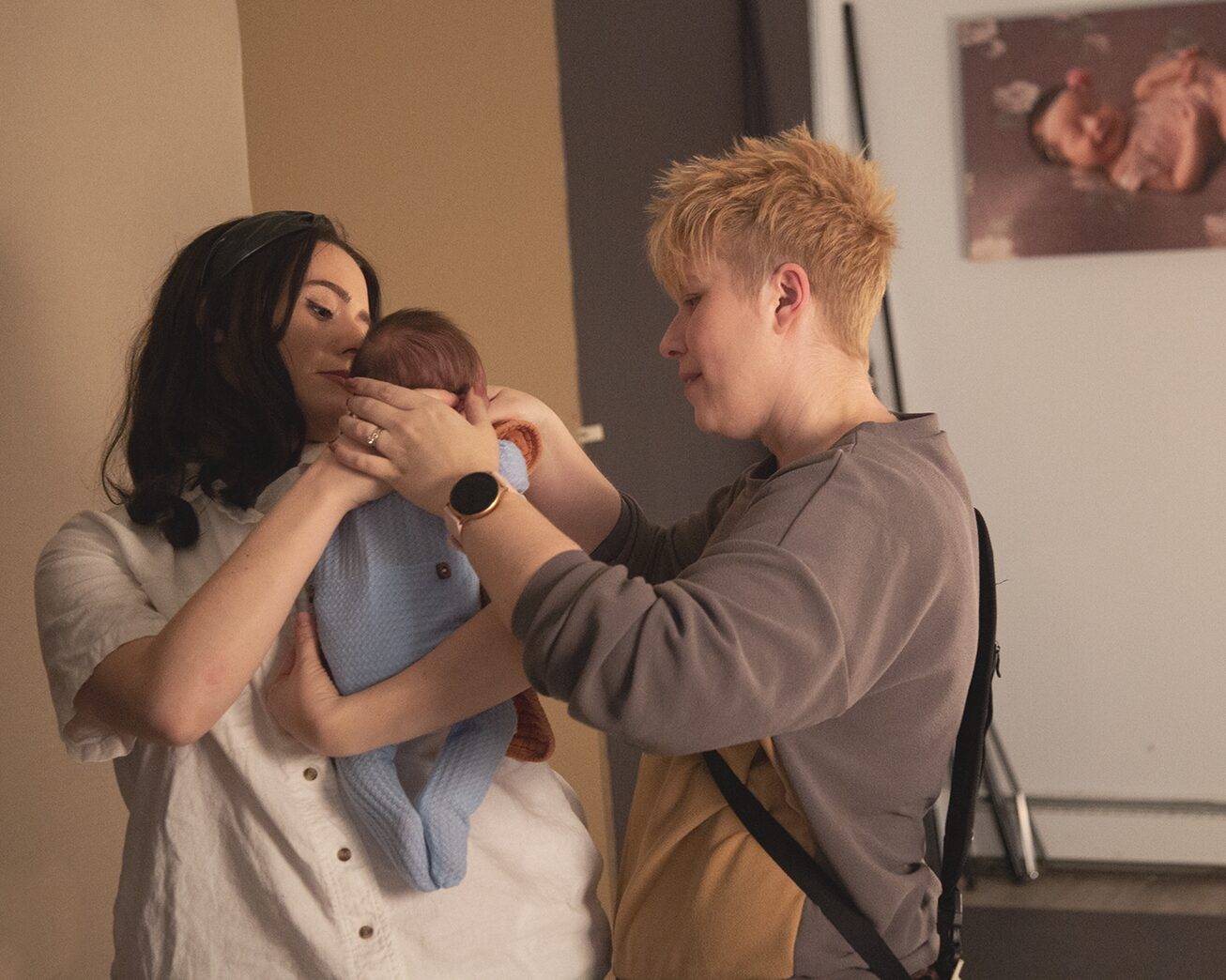
The first weeks with a newborn don’t look the way most people expect.
Even parents who prepared carefully — who read the books, took the classes, and felt emotionally ready — often find themselves surprised by how destabilizing this season can feel. Life doesn’t simply change when a baby arrives. It reorganizes itself completely, often without warning or clear structure.
What parents encounter in those early weeks isn’t just exhaustion. It’s disorientation. Time behaves differently. Identity feels unsettled. Emotions arrive without warning and don’t always make sense. And many parents quietly wonder why something so meaningful can also feel so hard.
The problem isn’t that the newborn stage is unusually difficult.
The problem is that it’s rarely talked about honestly.
The First Weeks Are a Threshold, Not a Phase to “Get Through”
The newborn stage is often described as something to survive until things improve — until sleep stretches lengthen, routines stabilize, and parents feel more confident.
But the first weeks aren’t just a difficult phase. They are a threshold.
This is the point where life before and life after no longer coexist comfortably. Old rhythms fall away, but new ones haven’t formed yet. Parents are no longer who they were, but they don’t yet feel like who they’re becoming.
That in-between state is inherently destabilizing.
Humans are not wired to transition identities overnight, especially while sleep deprived, physically healing, and responsible for another human’s survival. Feeling unmoored during this time is not a sign of failure — it’s a predictable response to an abrupt, life-altering change.
Emotional Whiplash Is Normal, Even When the Baby Is Wanted
One of the most jarring experiences for new parents is how unpredictable their emotions can be.
Love can be immediate and overwhelming, but it often shares space with fear, uncertainty, grief, or resentment. Parents may feel deep tenderness one moment and intense doubt the next. They may feel gratitude alongside a quiet sense of loss for the life that just changed.
These emotional shifts don’t mean something is wrong.
They are the result of:
Rapid hormonal changes
Severe sleep fragmentation
Increased responsibility
Constant sensory input
A nervous system under sustained stress
The brain is working overtime to keep everyone safe. Emotional regulation becomes harder. Small things feel big. Thoughts spiral more easily.
None of this indicates a lack of love or readiness. It indicates a system under strain.
Why Time Feels Broken in the Newborn Stage
Many parents describe the first weeks as both endless and fleeting.
Days feel impossibly long, yet weeks disappear without clear memory. Parents may struggle later to remember details from this time and feel frustrated or unsettled by the gaps.
This isn’t a personal failing.
During periods of high stress and exhaustion, the brain prioritizes survival and immediate problem-solving over memory consolidation. When parents are feeding frequently, monitoring breathing, responding to cries, and managing recovery, the brain focuses on now — not on storing experiences neatly for later recall.
The result is time distortion and memory gaps.
This is why the newborn stage can feel slippery in hindsight. Important moments happened, but parents were immersed inside them, not observing from a distance.
The Damage Done by “Enjoy Every Moment”
Few phrases place more pressure on new parents than “enjoy every moment.”
While usually said with kindness, it creates an impossible standard. The first weeks are physically demanding, emotionally volatile, and cognitively overwhelming. Enjoyment is inconsistent by design.
Expecting parents to savor every moment implies that discomfort or frustration is a failure of gratitude rather than a normal response to stress.
Not every moment is meant to be enjoyed.
Some moments are meant to be endured.
Some are meant to be learned from.
Some are simply meant to pass.
They can still matter deeply without being pleasant.
Exhaustion Changes Perception, Not Capability
Sleep deprivation in the newborn stage is not comparable to being tired after a busy week.
Chronic sleep disruption affects:
Emotional regulation
Cognitive flexibility
Confidence
Decision-making
Stress tolerance
When parents are exhausted, uncertainty feels heavier. Self-doubt grows louder. Small challenges feel insurmountable.
Parents often look back later and wonder why they felt so unsure when they were “doing fine.” The answer is simple: they were doing something extraordinarily demanding without rest.
Exhaustion distorts perception. It does not reflect competence.
Why Some Parents Don’t Feel Instantly Connected
One of the most distressing — and least discussed — realities of early parenthood is that not all parents feel immediate connection to their newborn.
This can feel frightening, especially in a culture that romanticizes instant bonding. Parents may worry that something is wrong with them or that they’re failing emotionally.
But attachment often develops through repetition, care, and time.
Connection builds through:
Feeding in the middle of the night
Learning cries
Responding consistently
Showing up again and again
Bonding is cumulative.
Instant connection happens for some parents, but it is not the only healthy path.
Lack of immediate emotional clarity does not predict long-term attachment.
The Invisible Labor That Drains Parents
Much of what parents do in the first weeks is unseen.
They are:
Tracking feeds
Monitoring breathing
Watching subtle cues
Managing appointments
Making constant micro-decisions
Regulating their own emotions while helping a baby regulate theirs
Because this labor is invisible, parents often underestimate its impact. They may feel guilty for being exhausted when they “haven’t done much.”
In reality, they are doing everything.
This constant vigilance is mentally and emotionally taxing, even when the baby is sleeping.
Why the First Weeks Can Feel Lonely, Even With Support
Many parents are surprised by how lonely the newborn stage feels.
Visitors may come and go, but meaningful connection changes shape. Conversations are interrupted. Attention is fragmented. Life outside continues while parents remain inside a narrow, repetitive loop.
This loneliness isn’t always about being physically alone. It’s about being inside an experience that few people can fully understand unless they’re living it.
Parents may feel like they’ve stepped outside normal time while the rest of the world moves on.
That sense of isolation is a normal response to a profound transition.
The Pressure to Appear “Okay”
Many parents feel pressure to appear competent and grateful during the newborn stage.
They worry about complaining. They minimize their struggles. They reassure others that everything is fine, even when they feel overwhelmed.
This performance can be exhausting.
When parents don’t have space to acknowledge difficulty, stress compounds. They may feel unseen or unsupported, even when help is technically available.
Being honest about how hard the early weeks can be is not negativity. It’s realism.
Why Parents Struggle to Remember This Time Later
Years later, parents often describe the newborn stage as important but hazy.
They remember feelings more than details. Exhaustion more than chronology. Tenderness without clear memory of how it unfolded.
This isn’t because the moments weren’t meaningful. It’s because parents were embedded inside them.
Perspective comes later.
This is why many parents value having tangible reminders from this time — not because it was perfect, but because it was foundational.
The First Weeks Are Not a Test
The early newborn stage is not an evaluation of parental competence.
It is not something to master quickly. It is not meant to feel efficient or smooth. It is meant to change you — gradually, unevenly, and deeply.
Uncertainty is part of the process. So is exhaustion. So is learning through experience rather than instruction.
If you feel unsteady, you are not behind. You are adapting.
This Season Matters, Even When It Feels Messy
The first weeks with a newborn are rarely peaceful in the way people imagine.
They are raw. They are intense. They are deeply human.
You don’t have to remember them clearly for them to matter.
You don’t have to enjoy them fully for them to be meaningful.
You don’t have to feel confident to be doing this well.
This season is doing important work — even on days that feel like pure survival.
And you are doing more right than you realize.
Those first weeks are tender, exhausting, surreal, and honestly… kind of a time warp. Newborn photos don’t require you to have it all together—they just require you to show up, and I’ll take it from there in a slow, baby-led session. If you want to read what’s included and how booking works, here’s the best place to start: Newborn Session Pricing & Packages.