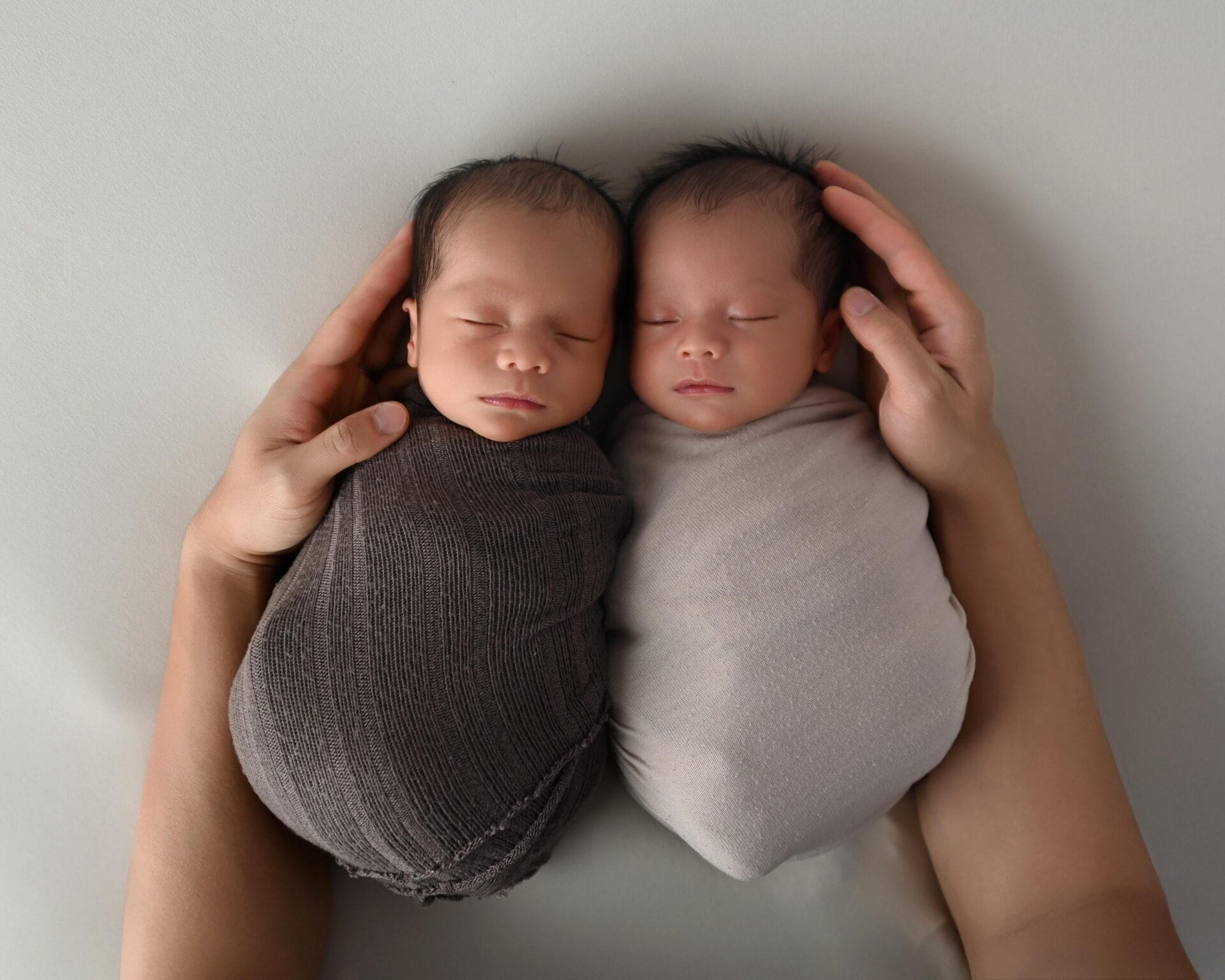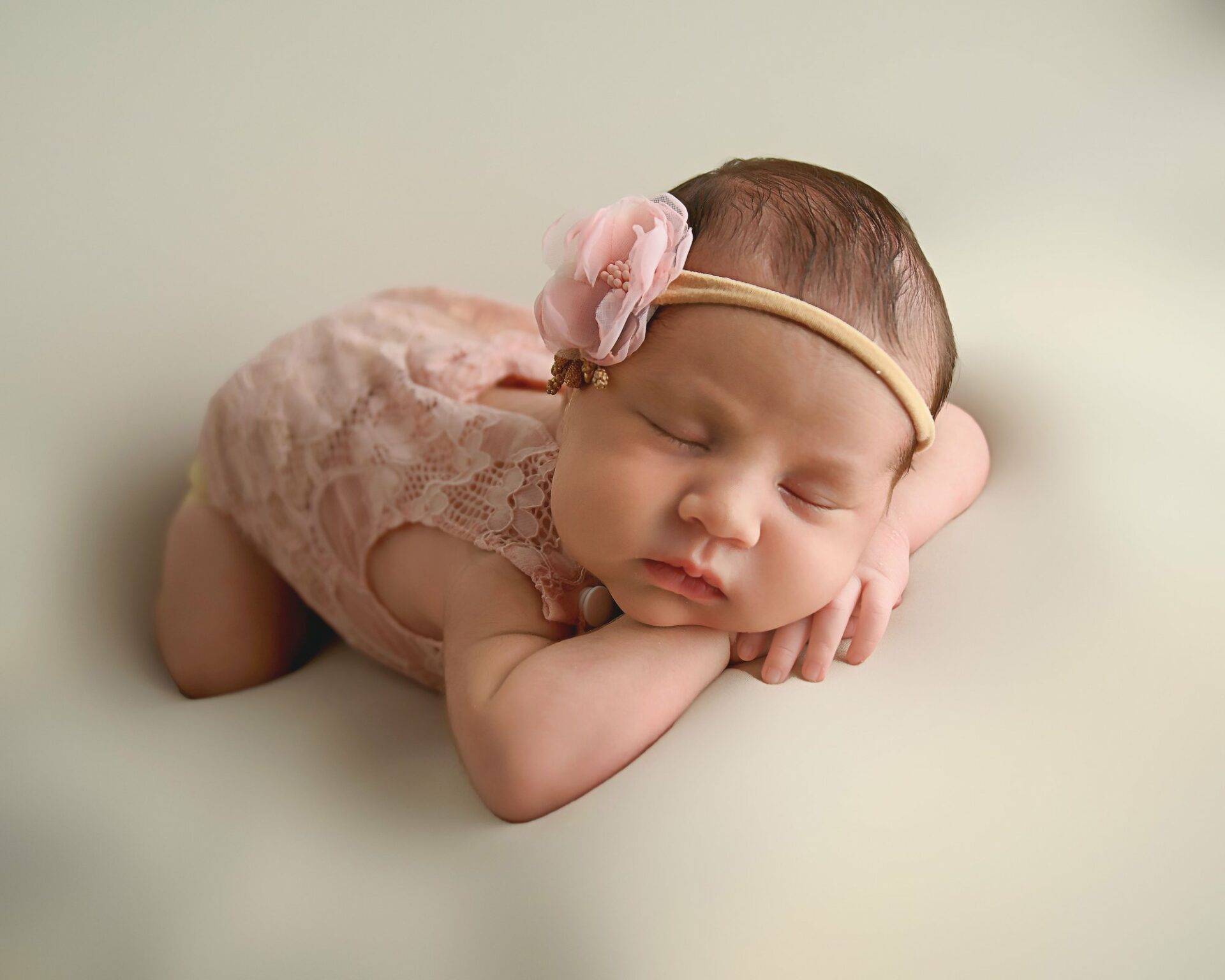
Newborns are constantly taking in the world for the first time.
Every sound, every touch, every change in temperature or light is new information their nervous systems are learning to process. While adults are often focused on how a photo session looks, newborns experience it entirely through sensation.
When a newborn becomes unsettled during a photo session, it’s rarely because they’re “fussy” or “difficult.” More often, they’re overstimulated — and that overstimulation can show up in ways that aren’t always obvious at first.
Understanding what can overstimulate a newborn during a photo session helps parents set realistic expectations and choose an experience that truly supports their baby, rather than asking them to adapt too quickly to unfamiliar conditions.
What Overstimulation Actually Looks Like in Newborns
Overstimulation doesn’t always mean crying.
Sometimes it shows up as restlessness, clenched hands, stiffened bodies, shallow sleep, or repeated startle reflexes. Other times it looks like a baby who won’t fully settle no matter how much they’re fed or rocked.
Newborns don’t have the ability to filter sensory input yet. When too much happens too quickly, their systems simply get overwhelmed.
During a photo session, overstimulation often builds gradually. A baby might tolerate one or two changes, but once several stimuli stack together, the nervous system reaches its limit.
This is why a calm session isn’t about eliminating stimulation entirely — it’s about managing it intentionally.
Bright or Inconsistent Lighting
Light is one of the most common sources of newborn overstimulation.
Bright, direct light — especially when it changes frequently — can be overwhelming for babies whose eyes are still adjusting to the world. Sudden shifts between light and shadow, flashes, or harsh overhead lighting force newborns to constantly adapt.
Inexperienced setups sometimes rely on bright lights or rapidly changing lighting angles to speed through poses. While this may work visually, it can disrupt a baby’s sense of safety and predictability.
Gentle, consistent lighting allows newborns to remain settled. When light is soft and steady, babies don’t have to keep recalibrating, which supports deeper rest during the session.
Too Much Handling, Too Quickly
Newborns are sensitive to how they’re touched and moved.
Frequent repositioning, rapid posing changes, or unfamiliar hands can quickly become overwhelming. Even when handling is gentle, doing too much too fast can cause a baby to tense or startle.
Overstimulation isn’t about any movement — it’s about pacing.
Newborns do best when transitions are slow and purposeful. They need time to adjust to each change before another one is introduced. When sessions prioritize variety over comfort, babies are often pushed beyond what their systems can comfortably handle.
Experienced newborn photographers know that fewer setups done calmly almost always result in better images than many setups done quickly.
Noise and Background Activity
Newborns are accustomed to muffled, rhythmic sound before birth — not sudden noise or multiple overlapping voices.
During a photo session, background noise can add up quickly:
-
Loud conversations
-
Phones chiming
-
Music playing too loudly
-
Constant shushing from multiple people
Even well-meaning attempts to soothe can become overstimulating if too many sounds compete for attention.
A quiet studio environment allows newborns to relax into sleep or calm alertness without constantly reacting to sound. Silence, or very gentle background noise, gives their nervous systems space to settle.
Temperature Fluctuations
Newborns have limited ability to regulate their body temperature.
If a room is too cool, too warm, or changes frequently, babies may become unsettled without obvious signs at first. Temperature discomfort often shows up as restlessness or difficulty staying asleep rather than clear distress.
Inconsistent temperature is especially common in spaces not designed specifically for newborn sessions. Drafts, open doors, or adjusting heat between setups can all contribute to subtle discomfort.
A well-prepared studio maintains a steady, warm environment so babies don’t have to keep adapting physically while also processing everything else around them.
Emotional Energy in the Room
Newborns are remarkably sensitive to emotional cues.
They may not understand language, but they respond to tone, tension, and movement. When parents are anxious, rushed, or worried about how the session is going, babies often pick up on that energy.
This doesn’t mean parents need to be perfectly calm — that’s unrealistic during the newborn phase. But it does mean that a session environment should be structured in a way that reduces pressure on parents, so they don’t feel responsible for “making things work.”
When parents feel supported, babies often follow.
Too Many Expectations at Once
Sometimes overstimulation isn’t sensory — it’s situational.
When a session carries too many expectations, everything becomes more intense. Parents may feel pressure for the baby to sleep, to pose a certain way, or to behave according to a timeline.
That pressure changes how the room feels.
Newborns don’t respond well to urgency. They respond to patience. Sessions that allow flexibility — feeding when needed, pausing when necessary, and adjusting without frustration — naturally reduce overstimulation.
When expectations are realistic, babies aren’t asked to do more than they’re ready for.
Why Slower Sessions Work Better
Slower sessions aren’t inefficient — they’re effective.
By spacing out transitions, limiting stimulation, and prioritizing comfort, photographers allow newborns to remain regulated for longer periods. This often results in smoother sessions overall, even if they take more time.
A calm session doesn’t mean nothing happens. It means things happen intentionally.
Parents are often surprised by how peaceful newborn sessions can feel when stimulation is managed thoughtfully. Babies settle more easily. Parents relax. The experience feels less like a production and more like a quiet moment preserved.
What Parents Can Do to Help Reduce Overstimulation
Parents don’t need to manage the entire session — that’s not their job. But a few small considerations can support a calmer experience:
-
Arriving without rushing
-
Feeding the baby when needed, without watching the clock
-
Trusting the process rather than worrying about outcomes
-
Allowing pauses without apologizing
Most importantly, parents can choose a photographer whose approach aligns with their baby’s needs, not just their visual preferences.
Calm Isn’t an Accident
Newborns don’t need elaborate setups or constant movement to create meaningful photographs. They need safety, warmth, and predictability.
Overstimulation happens when too much is asked of a brand-new nervous system all at once. Calm happens when sessions are designed with intention and experience.
When overstimulation is minimized, newborns don’t just tolerate photo sessions — they rest into them. And that difference shows not only in the images, but in how the experience is remembered long after the photos are taken.
I’ll move straight into that unless you want any adjustments before I continue.