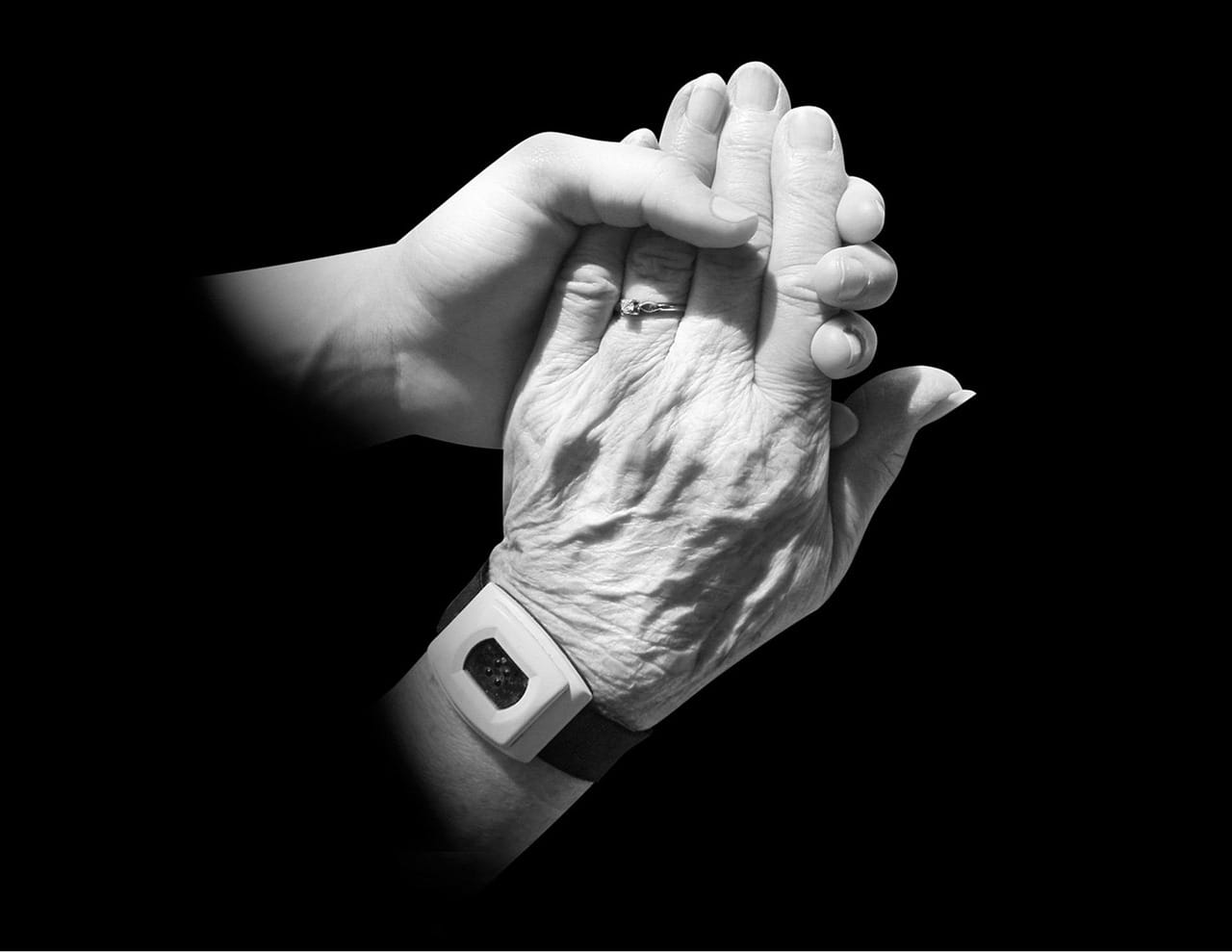
Someone I love has told me more than once that he wishes he had more photographs of his mother.
She died when he was five years old. Cancer. He has a few images — the kind that surface in old albums and shoeboxes, the kind that were taken without intention, without any awareness that they would one day be all that remained. They are precious. And they are not enough.
He is not alone in this. Most of us, when we arrive at the end of a life — whether our own or someone we love — find ourselves standing in a room full of absence. We reach for photographs. We find too few. We find none at all. And we carry that absence for the rest of our lives.
I am a photographer. I have spent more than twenty-five years documenting the beginning of life — the first hours, the first days, the impossibly small hands and the enormous weight of new love. I understand viscerally what it means to photograph something fragile and fleeting, to make an image that will outlast the moment that created it.
End of life photography is the other side of that same coin. And in my work, and in my thinking about what photographs actually do in the world, I have come to believe it may be the most important photography there is.
We Are a Culture That Photographs Beginnings
We photograph babies before they are born. We photograph the birth itself, the first breath, the first hour. We photograph every milestone — first steps, first days of school, graduations, weddings. We have built an entire industry around documenting the arrival and growth of life.
We are much less practiced at photographing the other end.
This is not accidental. Death in contemporary Western culture is largely hidden. It happens in hospitals and care facilities, behind closed doors, in spaces designed to manage rather than witness. We have medicalized dying in ways that have simultaneously removed it from the fabric of everyday life and made it harder to approach with intention and presence.
But photography has always been, at its heart, a practice of witness. The camera does not look away. And in looking — in making the deliberate choice to be present with a camera at the end of a life — something important happens. The person being photographed is seen. Fully. Without the softening that memory applies over time. The images that result are not documents of decline. They are records of a person who existed, who mattered, who was loved.
The camera does not look away. And in that act of looking, something important happens: the person being photographed is seen.
What Photographs Do That Memory Cannot
Memory is unreliable. This is not a criticism — it is simply the nature of how human beings store experience. We remember feelings more reliably than details. We remember the broad strokes and lose the texture. And over time, even those broad strokes fade and shift, shaped by grief, by longing, by the stories we tell ourselves about the people we have lost.
A photograph holds still.
It holds the particular way a person held their hands. The specific angle of light on a face on a Tuesday afternoon in November. The way someone looked at the person they loved most in the world. These are details that memory cannot preserve with fidelity. But a photograph can.
I think often about what it means to a child to have a photograph of a parent they lost before they were old enough to form reliable memories. Or what it means to an adult to find, decades later, an image of a grandparent they barely knew — and to suddenly see, in the shape of a jawline or the set of a gaze, something of themselves looking back.
Photographs create continuity across time. They allow the dead to remain present in the lives of those who loved them. They are not a substitute for grief — nothing is — but they are a form of companionship that outlasts the body and, in some ways, outlasts memory itself.
What End of Life Photography Actually Looks Like
I want to address something directly, because I know it is the first question that comes to mind: this is not about photographing death. It is not about hospital rooms and medical equipment and the stark documentation of physical decline.
End of life photography is about photographing a life, at the chapter when that life is most precious and most finite.
It might look like a session with an elderly parent in their own home, surrounded by the objects that tell the story of who they are. Their garden. Their kitchen. The chair where they always sat. The hands that made things and held people and marked the passage of decades.
It might look like a family gathering — not a posed portrait where everyone is arranged and told to smile, but a documentary session where the camera moves through the room and finds the moments that will matter most in twenty years. The way a grandfather looks at his grandchild. The way a mother and daughter sit together without needing to say anything.
It might look like a single portrait — deliberate, dignified, beautiful — made with the explicit intention of creating something that will be held and kept and passed down.
Every session is different because every person is different and every family is different. What they share is intention. The choice to be present. The choice to make images that will carry forward what matters most about this person and this time.
The Question I Hear Most Often
When I talk about this work, the question I hear most often is some version of: isn’t it too sad?
I understand the question. We have been taught to associate photography with celebration, with milestones that move forward rather than ones that mark an ending. The idea of bringing a camera into a space of illness or age or dying can feel, at first, like an intrusion or an unkindness.
But I have found the opposite to be true. Families who choose to do this work — who make the deliberate choice to photograph this chapter rather than look away from it — consistently describe the experience as a gift. Not just the images themselves, but the act of doing it. The permission it gives everyone in the room to be fully present. The way it says, without words: this person matters. This time matters. We are paying attention.
The regret I hear far more often than anything else is not from families who made these images. It is from families who didn’t. Who waited. Who told themselves there would be more time, or that it felt strange, or that they weren’t sure how to begin.
The regret I hear far more often than anything else is not from families who made these images. It is from the ones who didn’t.
When to Begin
The answer is earlier than you think.
End of life photography is most powerful — and most possible — when there is still time to be unhurried. When the person being photographed can participate, can choose their setting, can be present in the images in the fullest sense. This is not something to plan for the last weeks or days. It is something to consider when the diagnosis comes, when the conversation about the future shifts, when you find yourself thinking: I should do something about photographs.
That thought — I should do something about photographs — is the right moment. Not because urgency should drive fear, but because intention produces better images than desperation. The photographs made with time and care will be different from the ones made in crisis. Both matter. But the ones made with space to breathe, with the person still themselves in the ways that matter most, will be the ones that carry the most weight.
If you are reading this and thinking of someone — a parent, a grandparent, a partner, a friend — I want to tell you directly: now is a good time. Not because time is running out. But because the people we love deserve to be seen while they are still fully here to be seen.
A Note About My Approach
I came to this work through photography and through anthropology — a discipline that has spent over a century thinking about what images do in human cultures and why they matter. Across every culture and every era, humans have found ways to hold onto the faces of the dead. Cave paintings. Mourning portraits. Daguerreotypes kept in lockets. The photographs on phones that we cannot bring ourselves to delete.
This impulse is not morbid. It is one of the most human things there is.
When I photograph a family at the end of a life, I am not trying to document illness or document grief. I am trying to document love — the particular, irreplaceable, specific love between these people in this room at this time. I am trying to make images that will still be meaningful in fifty years, when the people in them are gone and the people who loved them are older and the details of this particular afternoon have long since faded from memory.
That is what photographs are for. That is what they have always been for.
The Photographs That Will Matter Most
The man I love still wishes he had more photographs of his mother. He has made peace with what he has — with the few images that survived, that give him something to hold onto across the distance of decades. But the wish remains. It always will.
I think about that wish when I do this work. I think about what it would have meant for that five-year-old boy to have more images. More moments caught still. More evidence of a person who existed and loved him and was real.
I cannot change what happened then. But I can show up now, for the families who are in the middle of that story — who still have time, who still have the person they are afraid to lose, who are just beginning to understand that the photographs they make in the next weeks or months may be among the most important they will ever make.
If that is you — if you are in that moment — I would be honored to be there with you.