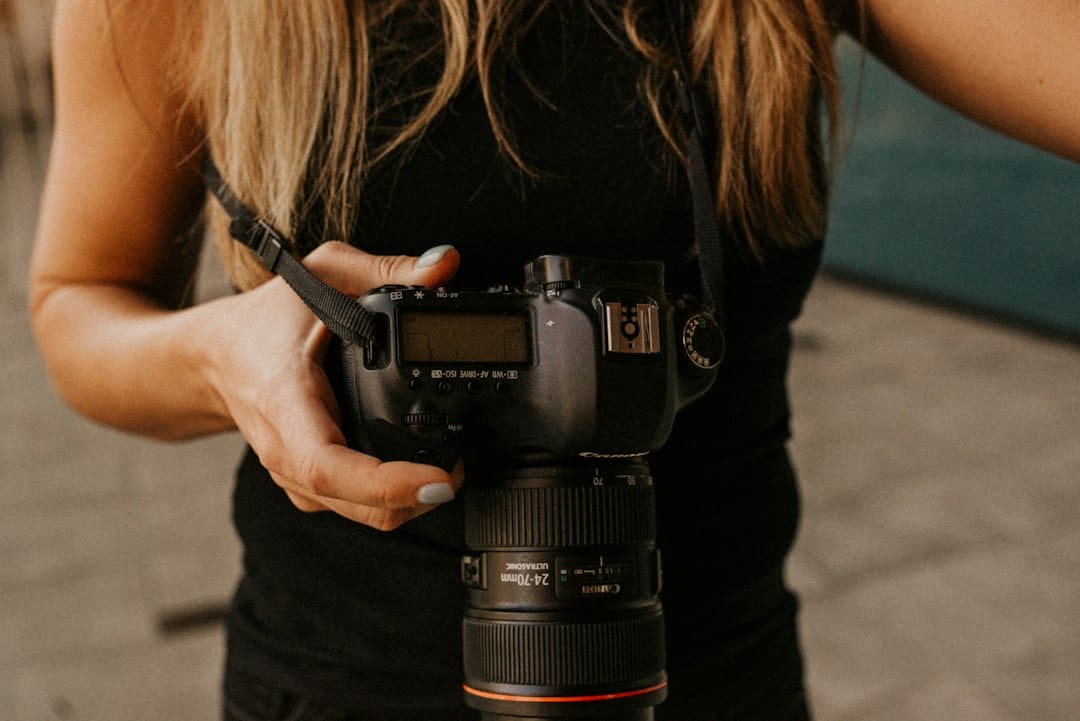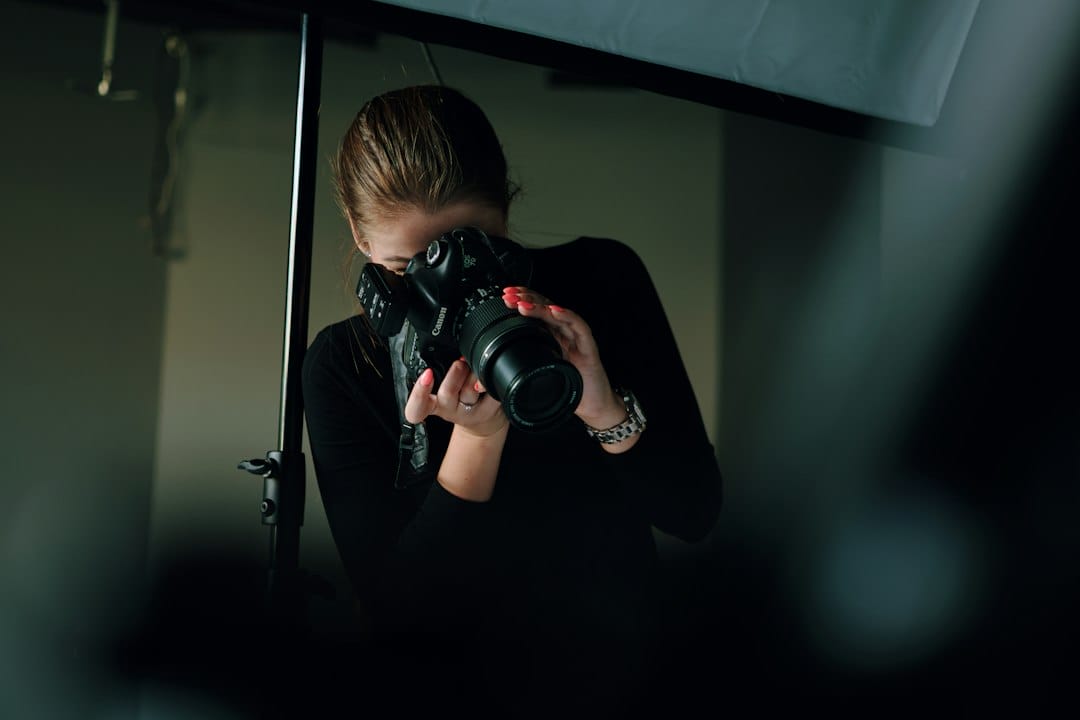
When clients look at my portrait work — the minimalist setups, the particular quality of light, the way I expose skin tones — they sometimes ask me how I developed my eye.
The honest answer involves silver halides.
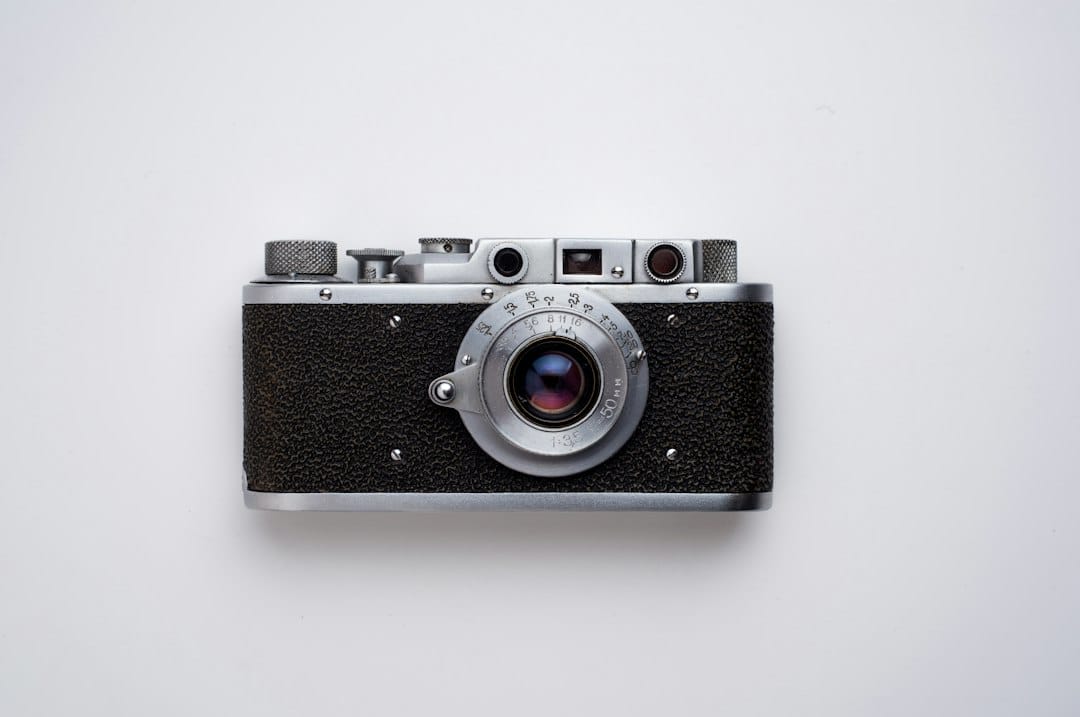
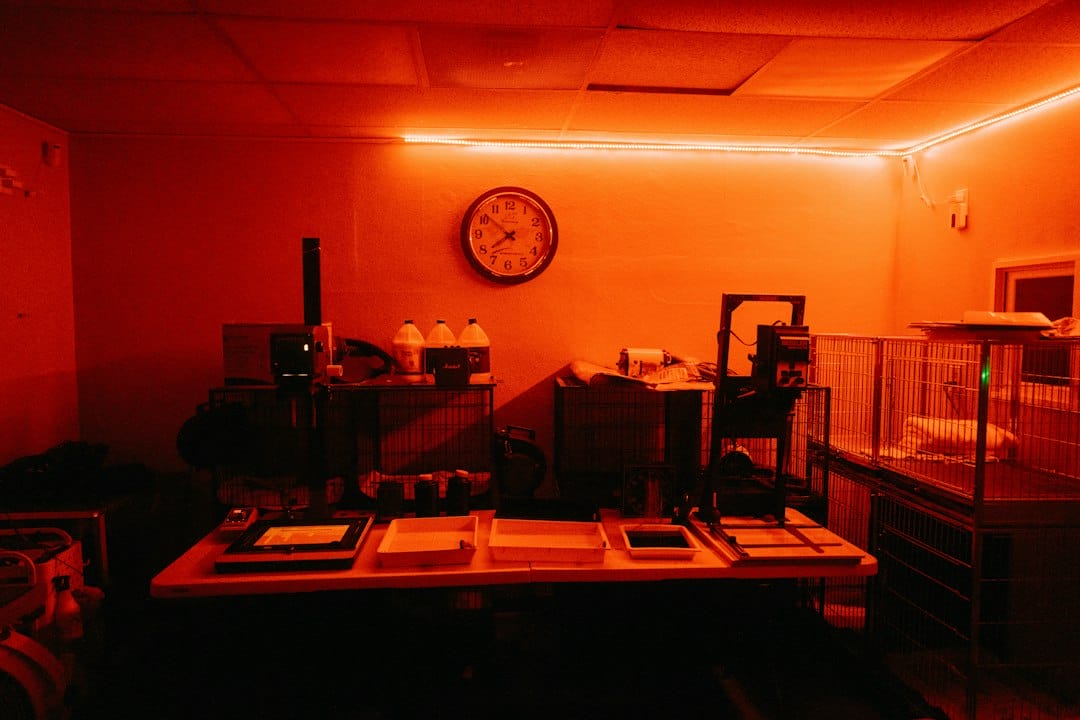
Before I was a digital portrait photographer, I was a darkroom printer. I spent years working in a darkroom — developing film, making prints, studying the relationship between light and chemistry in a way that digital photography simply doesn’t require. And the way I learned to see in that darkroom has never left me.
This post is about that relationship. How decades of darkroom work shaped the way I see light, approach a session, and think about what makes a portrait matter. And why I believe that what I learned in analog photography is still the most valuable thing I bring to my studio practice today.
What a Darkroom Actually Teaches You
The Zone System and Tonal Thinking
In darkroom printing, you work with tonal values constantly. Every negative carries a range of tones — from deep shadow to bright highlight — and your job as a printer is to understand how to render that tonal range on paper in a way that is both technically correct and emotionally true to the subject.
Ansel Adams’ Zone System — the framework for understanding tonal values in black and white photography — was something I learned not from a book but from hours of test prints and contact sheets. From holding prints up to light and learning to read shadows. From understanding that the difference between a good print and a great print often lives in the midtones.
That tonal thinking never goes away. When I’m setting up a studio portrait now, I’m still thinking in zones. Where will the shadows fall? What’s the quality of light on the near side of the face versus the far side? Is there enough separation between the subject and the background to create depth without competing?
Those questions come from darkroom training. They’re reflexive now — I don’t consciously work through them, but they were built through years of making physical prints and studying what they revealed.
Patience as a Technical Skill
Darkroom work is slow.
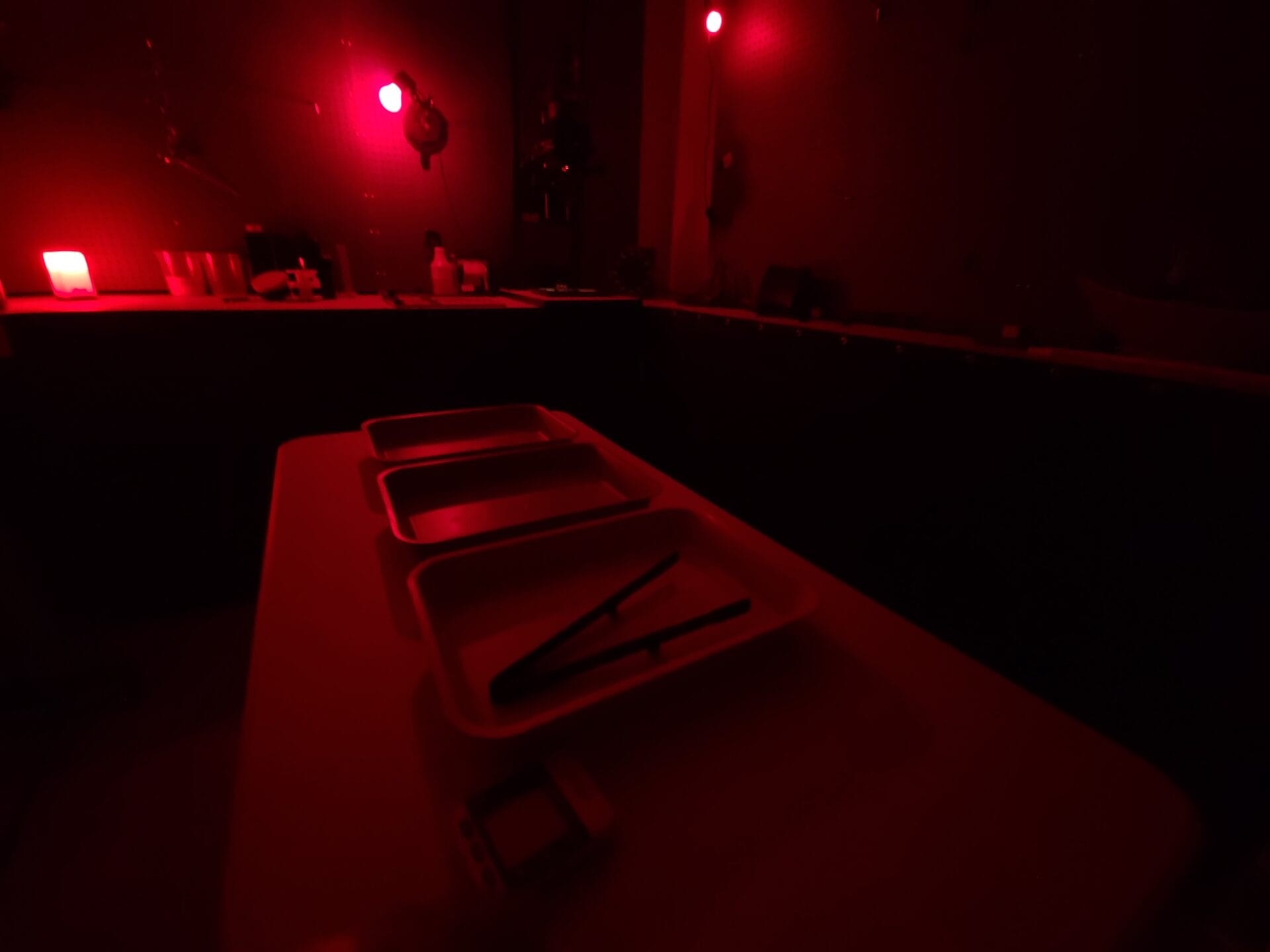
You expose a print. You move it through developer, stop bath, fixer. You rinse it. You look at it under a print viewing light. You decide what needs to change — more exposure here, less there, burning in a highlight, dodging a shadow. You make another print.
The process can take an hour for a single image. Sometimes longer.
That slowness teaches something that digital photography actively works against: the value of looking carefully before deciding.
In a darkroom, you can’t just spray and pray and sort it out in Lightroom. Every decision is deliberate and every mistake costs real time and chemistry. So you learn to look first. To see what’s actually there rather than what you’re expecting to find.
I carry that into studio sessions. The patience that darkroom work built is the same patience that lets me wait for the right moment rather than capturing the merely acceptable one. It’s what keeps me from rushing. It’s what makes me look at a family for five minutes before I lift the camera.
Light as a Physical Thing
This is harder to explain but it’s the most important thing darkroom work gave me.
In digital photography, light is information. It’s data that gets processed by a sensor and rendered by software. You can see the information on a histogram. You can manipulate it in post-processing. It’s quantifiable and correctable.
In analog photography — and especially in darkroom printing — light is physical. The light that hit the film created a chemical reaction. The light that hits the paper in the enlarger creates another one. The relationship between light, chemistry, and time is direct and irreversible.
Working with light as a physical substance rather than a digital input changes how you think about it. You become attentive to quality in a different way — not just quantity, not just color temperature, but the particular texture and direction and weight of light at a specific moment.
When I look at light falling on a subject’s face in my studio now, I’m seeing it with the eyes of someone who has spent decades thinking about how that light will behave. Not on a sensor — on paper. In chemistry. In time.
That’s a different kind of seeing. And I believe it’s visible in the final images, even though the camera I’m holding is digital.
What Darkroom Work Brought to My Portrait Practice
The most direct influence of my darkroom background on my portrait work is in the lighting setups I choose.
I am drawn consistently toward simple, directional light. One source. Strong shadow. Clear separation between lit and unlit sides of a face. This is the aesthetic language of classic darkroom printing — the kind of light that prints beautifully on silver gelatin paper, that creates tonal depth and a sense of volume and presence.
Digital photography can reproduce any kind of light. It can handle complex multi-source setups that would have been difficult to manage on film. But I keep coming back to simple light because that’s what feels true to me — because that’s the light I learned to see and value and trust over decades of darkroom work.
The minimalism of my studio aesthetic is also a darkroom inheritance. Darkroom printing rewards simplicity. A cluttered, busy image is hard to print well — there are too many competing tonal relationships, too many decisions to make about where the eye should go. Clean, simple compositions with clear subjects and uncluttered backgrounds print beautifully. They also make better portraits.
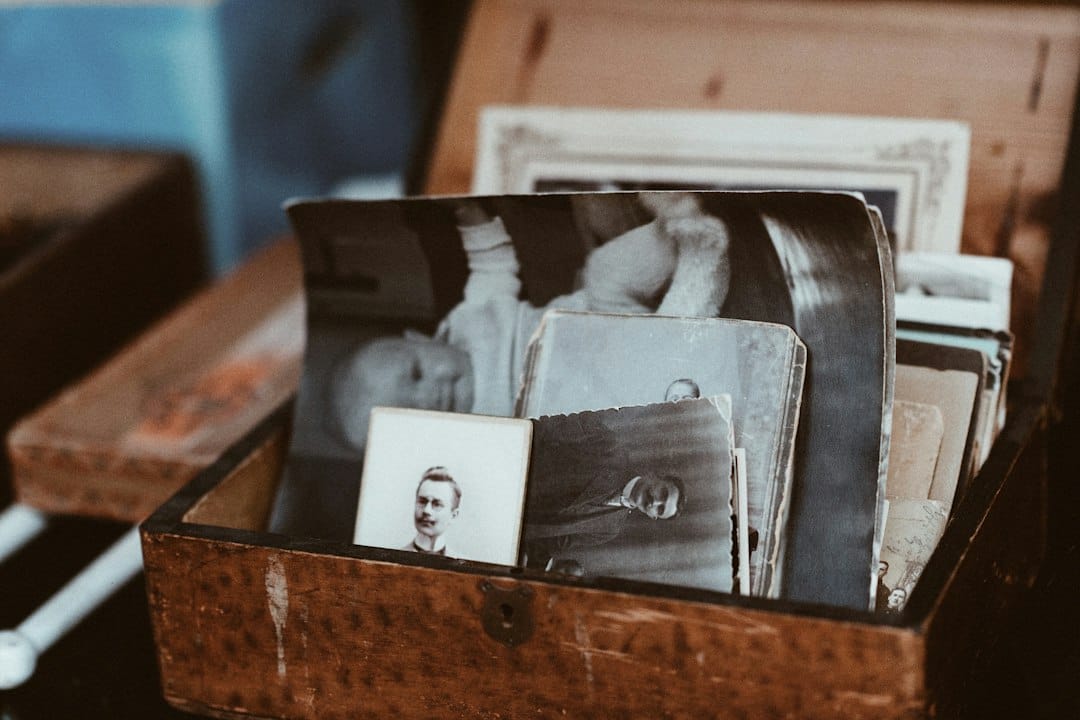
So do black and white images, which I return to regularly in my fine art portrait work. Black and white is where I started. It’s where the tonal thinking is most visible, most direct. Shooting in black and white, even digitally, connects me to the visual language I developed over years in the darkroom.
Why I’m Teaching This
I’ve carried darkroom skills with me through an entire career that has increasingly moved away from analog and toward digital. And I’ve never stopped believing that what I learned in that darkroom is foundational — not just to my photography specifically, but to a deeper understanding of what photography actually is.
Photography is light and time and chemistry. Digital imaging is information and processing. Both make images. But they teach different things about seeing.
I’m opening my Saint Paul studio to darkroom students this winter because I want to share what I know. Not to create professional darkroom printers — though some students might go that direction. But to give people the experience of working with light as a physical thing, of making images slowly and deliberately, of developing the particular quality of attention that analog work builds.
If what I’ve described here sounds like something you want to experience firsthand — the slowness, the chemistry, the particular quality of attention that darkroom work demands — reach out. I’m opening my Saint Paul darkroom to students this winter and I’d love for you to be part of it.